Standardizing the Talent Acquisition Lifecycle
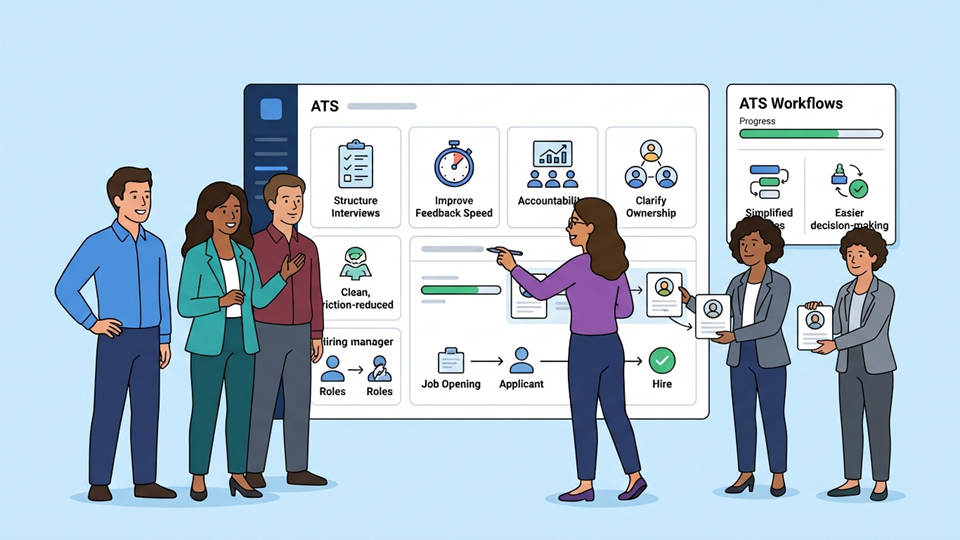
As organizations grow, hiring naturally evolves from an informal, relationship-driven activity into a structured business function supported by processes, data, and measurable outcomes. Without a standardized recruitment workflow, companies often experience operational bottlenecks, inconsistent hiring decisions, and extended vacancies that negatively impact business performance.
A fragmented hiring process can also damage the candidate experience. Delays in communication, inconsistent interview practices, and unclear evaluation criteria frequently cause qualified candidates to abandon the process before a final decision is reached. At the same time, leadership teams lose visibility into key recruitment metrics, making it difficult to identify inefficiencies and continuously improve hiring outcomes.
To scale effectively, organizations should establish a standardized talent acquisition framework that treats every vacancy as a repeatable and measurable business process. Companies that implement structured hiring methodologies consistently report improvements in both quality of hire and employee retention. The goal is not simply to increase efficiency, but to create a recruitment experience that reinforces the employer brand at every stage, from the initial job posting through to the final offer.
The foundation of this process begins with workforce planning and role definition. Before a position is advertised, hiring managers should clearly document the competencies, technical capabilities, and behavioral characteristics required for success. This preparation helps eliminate ambiguity and ensures that recruitment efforts target the right audience from the outset.
Well-crafted job descriptions serve as an effective filtering mechanism, attracting candidates who are aligned with the role while discouraging unsuitable applications. Organizations should maintain a centralized library of job descriptions to ensure consistency across departments and locations. In addition, defining success metrics, such as expected achievements during the first 90 days, enables recruiters and hiring managers to communicate realistic expectations throughout the interview process, reducing the likelihood of early turnover after hire.
Optimizing Candidate Sourcing and Screening
Once a role has been clearly defined, the focus shifts to attracting and evaluating talent. One of the most common challenges faced by growing organizations is managing a large volume of applications while maintaining recruitment quality and speed. Without a structured sourcing strategy, recruiters can quickly become overwhelmed by unqualified applicants, resulting in slower decision-making and reduced productivity.
To overcome this challenge, organizations should adopt a multi-channel sourcing approach that prioritizes high-intent candidates. While traditional job boards remain valuable, they should be complemented by professional networks, industry communities, and employee referral programs. Referral-based hiring consistently delivers strong results because existing employees naturally help identify individuals who are likely to align with both the organization's culture and performance expectations.
A formal referral program with clearly defined incentives can significantly improve the quality of incoming candidates while reducing recruitment costs. By encouraging employees to actively participate in talent acquisition efforts, organizations create an additional sourcing channel that is often more effective than external advertising alone.
Screening should be approached as a structured evaluation process rather than an informal conversation. Many successful organizations implement a two-stage screening model. The first interaction confirms candidate interest, availability, and basic qualifications, while the second focuses on a deeper assessment of technical competencies, problem-solving capabilities, and communication skills.
Standardized scorecards are particularly valuable during this phase. By requiring interviewers to evaluate candidates against predefined competencies and assign objective scores, organizations reduce subjectivity and improve consistency across hiring decisions. This data-driven approach helps ensure that advancement through the recruitment process is based on evidence rather than intuition, while also providing useful feedback for candidates who are not selected.
Consistency in sourcing and screening contributes directly to shorter hiring cycles. Clear evaluation criteria reduce unnecessary delays, minimize repetitive discussions, and allow recruitment teams to make confident decisions more efficiently.
Finalizing Talent Selection and Driving Successful Onboarding
The final stage of the recruitment lifecycle is where the organization's investment in sourcing and evaluation begins to generate measurable returns. By this point, candidates have already demonstrated their technical capabilities and suitability for the role. Final interviews should therefore focus on cultural alignment, collaboration style, long-term growth potential, and overall fit within the organization.
Many organizations benefit from involving multiple stakeholders in the final evaluation process. Cross-functional interview panels provide broader perspectives and help assess how candidates are likely to collaborate with colleagues across different teams. This approach is particularly valuable for organizations that rely on agility, teamwork, and cross-departmental communication to achieve business objectives.
Speed remains essential during the offer stage. Highly qualified candidates are often engaged in multiple recruitment processes simultaneously, meaning that unnecessary delays can result in losing top talent to competitors. Establishing predefined compensation frameworks and approval workflows enables organizations to extend offers quickly and confidently once a final decision has been made.
However, the recruitment process should not be considered complete when a candidate signs an employment contract. The transition from candidate to productive employee is a critical extension of the hiring lifecycle. Organizations that invest in structured onboarding programs significantly improve employee engagement, productivity, and long-term retention.
High-growth companies frequently rely on specialized platforms to manage this transition effectively. By ensuring that access credentials, documentation, equipment, training resources, and onboarding tasks are prepared in advance, organizations create a smoother and more professional first-day experience.
Zamdit supports the entire talent acquisition lifecycle, from initial candidate outreach through onboarding and early employee development. By centralizing recruitment activities, communication, documentation, and performance metrics within a single platform, organizations gain complete visibility into their hiring operations and can continuously optimize their processes using real-world data.
A seamless connection between recruitment and onboarding is one of the strongest indicators of a mature talent acquisition strategy. Organizations that successfully integrate these stages are better positioned to attract, engage, and retain the talent required to support long-term growth.