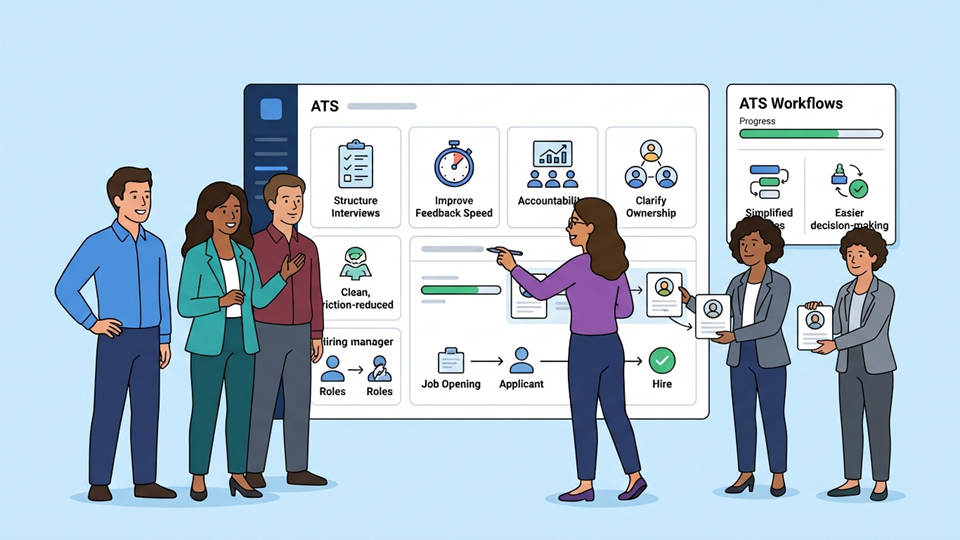
How manual recruitment processes silently impact business performance
Many organizations continue to rely on spreadsheets, email chains, shared folders, and disconnected tools to manage recruitment activities. While these manual processes may appear cost-effective on the surface, they often create significant hidden expenses that affect hiring performance, operational efficiency, and long-term business growth.
The direct costs of recruitment, such as advertising vacancies, agency fees, and recruiter salaries, are relatively easy to measure. However, the indirect costs associated with inefficient processes are frequently underestimated. Delays in hiring, administrative overhead, inconsistent candidate experiences, poor data quality, and missed opportunities can collectively create substantial financial and operational burdens.
As organizations compete for increasingly scarce talent, the efficiency of recruitment operations has become a strategic business concern rather than merely an administrative function. Companies that continue relying heavily on manual processes often experience longer hiring cycles, increased employee turnover, lower recruiter productivity, and reduced competitiveness in the talent market.
Research across the talent acquisition industry consistently demonstrates that organizations with highly automated recruiting operations achieve faster hiring times, improved candidate satisfaction, and better long-term retention outcomes. The challenge for many organizations is that the costs of manual recruitment rarely appear as a single line item, making them difficult to identify and quantify.
Understanding these hidden costs is essential for organizations seeking to improve recruitment performance and build sustainable hiring capabilities.
The operational costs of administrative inefficiency
One of the most immediate consequences of manual recruitment processes is the amount of administrative work required to maintain them. Recruiters and hiring managers frequently spend a significant portion of their time performing repetitive tasks rather than engaging in strategic talent acquisition activities.
Common manual activities include transferring candidate information between systems, updating spreadsheets, scheduling interviews through email exchanges, generating reports, managing approval workflows, and manually communicating with candidates. Although each task may require only a few minutes, the cumulative impact across hundreds or thousands of candidates becomes substantial.
For example, if a recruiter spends just fifteen additional minutes per candidate on administrative activities and processes 1,000 candidates annually, this represents approximately 250 hours of additional work every year. Across a recruiting team of ten recruiters, the organization effectively loses more than 2,500 hours of productive capacity.
Administrative inefficiencies also increase the likelihood of human error. Candidate records may become duplicated, interview feedback can be misplaced, communications may be delayed, and reporting accuracy can deteriorate. These operational problems often create additional work, further increasing costs.
In many organizations, hiring managers also experience productivity losses due to fragmented processes. Delays in receiving candidate information, coordinating interviews, and reviewing feedback can significantly slow decision-making and increase frustration among stakeholders.
The financial impact of slower hiring processes
Time-to-hire remains one of the most important recruitment metrics because delayed hiring has direct business consequences. Manual processes frequently extend recruitment timelines due to administrative bottlenecks, communication delays, and limited process visibility.
When critical positions remain vacant for extended periods, organizations experience lost productivity, increased workloads for existing employees, delayed projects, reduced customer satisfaction, and missed business opportunities. These costs often exceed the direct expenses associated with recruiting.
Consider a technology company attempting to hire a software engineer responsible for revenue-generating features. If manual recruitment processes extend the hiring timeline by thirty days, the business may experience significant delays in product delivery, potentially affecting revenue growth and customer retention.
Similarly, in sales organizations, prolonged vacancies can directly impact pipeline generation and revenue performance. Industry analyses frequently estimate that each day a revenue-generating position remains unfilled represents measurable financial losses.
Manual scheduling processes represent a particularly common source of delays. Coordinating interviews through multiple email exchanges between recruiters, candidates, and hiring managers can add several days to each hiring stage. Automated scheduling tools can often reduce these delays dramatically.
Organizations competing for highly sought-after candidates face an additional challenge. Top candidates frequently receive multiple offers within a short period. Companies relying on slow, manual processes risk losing qualified candidates to faster-moving competitors.
The hidden costs of poor candidate experience
Candidate experience has become a critical component of employer branding and talent acquisition strategy. Unfortunately, manual recruitment processes often create inconsistent, slow, and frustrating experiences for candidates.
Candidates increasingly expect transparent communication, timely updates, efficient scheduling, and streamlined application experiences. When organizations fail to meet these expectations, the consequences extend beyond individual hiring decisions.
Research consistently demonstrates that candidates who have negative recruitment experiences are less likely to reapply, refer others, or recommend the employer. Some candidates may also share their experiences publicly through social media platforms and employer review websites, potentially damaging the organization's reputation.
Manual communication processes contribute significantly to these problems. Recruiters managing hundreds of candidates through email inboxes may unintentionally delay responses, overlook candidates, or provide inconsistent information. Candidate follow-up requests can become difficult to manage without centralized tracking systems.
Poor candidate experiences also reduce the effectiveness of employer branding investments. Organizations may spend substantial resources on employer marketing campaigns, career websites, and talent attraction initiatives, only to undermine those investments through inefficient recruitment operations.
Furthermore, rejected candidates remain important stakeholders. Many unsuccessful applicants may become future customers, business partners, employees, or referral sources. Negative recruitment experiences can therefore generate broader commercial consequences beyond talent acquisition.
The strategic costs of limited data and poor decision-making
Manual recruitment processes typically generate fragmented, incomplete, and inconsistent data. Without reliable data, organizations struggle to measure performance, identify bottlenecks, optimize sourcing strategies, and improve hiring outcomes.
Many organizations still rely on spreadsheets and manually generated reports to evaluate recruitment performance. This approach often produces delayed insights and limits the ability to make data-driven decisions.
For example, organizations may struggle to accurately measure metrics such as time-to-fill, source effectiveness, cost-per-hire, recruiter productivity, candidate conversion rates, interview effectiveness, and diversity outcomes. Without these insights, recruitment leaders cannot effectively allocate resources or justify investments.
The absence of centralized data also affects workforce planning. Organizations with limited visibility into hiring trends, talent pipelines, and market conditions face greater difficulty forecasting future workforce requirements and identifying emerging skills gaps.
In addition, manual processes make compliance management more complex. Organizations operating across multiple jurisdictions may face challenges related to data privacy regulations, retention policies, equal employment requirements, and audit readiness. Non-compliance can result in financial penalties, legal exposure, and reputational damage.
Modern applicant tracking systems address these challenges by centralizing data collection, automating reporting, and providing real-time visibility into recruitment operations.
Why recruitment operations are increasingly becoming technology-driven
The growing complexity of hiring has transformed recruitment operations into a strategic business function that requires efficiency, scalability, and data-driven decision-making. Organizations that continue relying heavily on manual processes often discover that the true costs extend far beyond administrative inefficiency.
Hidden costs accumulate through longer hiring cycles, reduced recruiter productivity, poor candidate experiences, limited reporting capabilities, compliance risks, and missed business opportunities. Although these costs may not always appear directly on financial statements, they significantly affect organizational performance and competitiveness.
Technology-driven recruitment operations enable organizations to automate repetitive tasks, improve collaboration, accelerate hiring decisions, strengthen candidate experiences, and generate actionable insights. As talent markets become increasingly competitive, operational efficiency itself becomes a competitive advantage.
Organizations seeking to modernize their recruitment operations are increasingly adopting applicant tracking systems that centralize workflows, automate administrative processes, and provide comprehensive recruitment analytics. Platforms such as Zamdit help organizations eliminate manual bottlenecks, improve hiring efficiency, and build scalable recruitment operations capable of supporting long-term business growth.