Why traditional talent pools are losing effectiveness
For years, organizations have relied on talent pools as a strategic asset for future hiring. The concept appeared logical: collect resumes from previous applicants, referrals, silver medal candidates, and passive prospects, then revisit those records whenever a new position opened. However, as hiring markets have become more competitive and candidate expectations have evolved, many organizations have discovered that traditional talent pools rarely deliver the expected value.
The primary challenge is that most talent pools are static repositories rather than active relationships. Candidates submit an application, receive limited communication, and eventually become outdated records in an applicant tracking system. Contact information changes, skills evolve, career goals shift, and engagement disappears. By the time recruiters attempt to reconnect, response rates are often disappointing.
Research across the talent acquisition industry consistently demonstrates declining engagement with inactive candidate databases. Some enterprise recruiting teams report response rates below 10% when re-engaging candidates who have not interacted with the organization for more than twelve months. In practice, many talent pools become historical archives rather than strategic hiring assets.
At the same time, organizations face increasing pressure to reduce time-to-hire, improve quality-of-hire, strengthen employer branding, and decrease sourcing costs. These challenges have contributed to the emergence of a more sophisticated approach: talent communities.
What defines a modern talent community
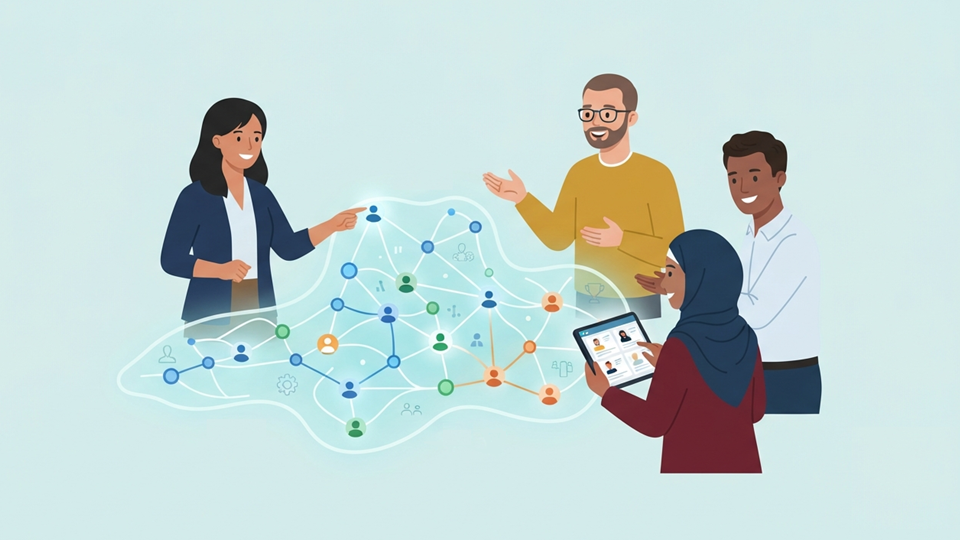
A talent community is fundamentally different from a traditional talent pool. Instead of storing candidate information passively, organizations actively build and nurture ongoing relationships with potential future hires.
Talent communities typically consist of candidates who have voluntarily joined a company's ecosystem because they share an interest in the organization, its mission, its culture, or future career opportunities. These communities can include previous applicants, passive candidates, alumni employees, event attendees, internship participants, referrals, and professionals interested in specific business areas.
The defining characteristic of a talent community is engagement. Organizations communicate regularly through newsletters, industry insights, event invitations, employee stories, hiring updates, webinars, professional resources, and personalized content streams. Rather than asking candidates to wait silently for job openings, companies maintain an active dialogue.
Major employers have increasingly adopted this approach. Organizations in technology, healthcare, financial services, and manufacturing sectors have invested heavily in community-based recruiting strategies because they recognize that future hiring success depends on relationship development rather than database accumulation.
For example, many global technology companies maintain dedicated talent communities for software engineers, cybersecurity professionals, AI specialists, and product managers. Members receive technical content, invitations to virtual events, and updates about organizational initiatives long before formal recruitment begins.
The business advantages of talent communities
Reducing hiring costs and sourcing dependency
One of the most significant advantages of talent communities is the reduction of external sourcing costs. Organizations spend substantial budgets on job boards, recruiting agencies, sourcing platforms, and advertising campaigns. Maintaining an engaged talent community creates a proprietary pipeline of qualified candidates that can be activated rapidly.
According to industry benchmarks, employer-generated talent pipelines can reduce cost-per-hire by 30% to 50% compared with externally sourced recruitment campaigns. While the exact savings vary by industry and role complexity, organizations consistently report measurable improvements in recruiting efficiency.
Recruiters also spend less time conducting repetitive searches because qualified candidates have already expressed interest and established relationships with the organization.
Improving candidate quality and cultural alignment
Talent communities allow organizations to evaluate long-term engagement rather than relying exclusively on resumes and interviews. Candidates who voluntarily participate in events, consume content, engage with employer communications, and remain connected over extended periods often demonstrate stronger motivation and cultural alignment.
This additional context helps hiring teams make more informed decisions. Recruiters can identify candidates who consistently engage with specific business units, technologies, or organizational initiatives, creating stronger matches between candidates and opportunities.
Organizations with mature talent communities frequently report improvements in quality-of-hire metrics, employee retention, and internal mobility outcomes.
Accelerating time-to-hire
When critical positions become available, speed matters. Competitive candidates often receive multiple offers within days or weeks. Organizations that depend entirely on external sourcing frequently lose top talent because their recruiting processes begin too late.
Talent communities create a pre-qualified audience that can be engaged immediately. Instead of launching a search from zero, recruiters can identify relevant community segments and communicate directly with candidates who already understand the company's value proposition.
Some enterprise recruiting teams report reducing hiring timelines by several weeks through strategic talent community programs, particularly for high-demand technical and leadership positions.
Building an effective talent community strategy
Creating a talent community requires more than adding a signup form to a careers website. Successful organizations treat talent communities as long-term relationship ecosystems supported by data, technology, content, and consistent engagement.
The first requirement is segmentation. A single generic talent community rarely performs effectively. Organizations should create distinct communities based on functional expertise, seniority, geography, industry specialization, or strategic workforce priorities. For example, separate communities for engineering leadership, sales professionals, graduate talent, and operations specialists allow for significantly more relevant communication.
Personalization is equally important. Candidates expect experiences that reflect their interests and career objectives. Automated workflows, behavioral tracking, and preference management help organizations deliver communications that feel relevant rather than promotional.
Content strategy also plays a central role. Effective talent communities provide value independent of active recruitment. Organizations often share market insights, career development resources, employee experiences, leadership perspectives, industry trends, and exclusive events. The objective is to create ongoing engagement rather than occasional recruitment campaigns.
Measurement should extend beyond traditional recruiting metrics. Organizations should monitor community growth, engagement rates, content consumption, event participation, reactivation success, conversion rates, quality-of-hire outcomes, and long-term retention performance.
Companies that approach talent communities strategically often discover that these programs become valuable employer branding assets in addition to recruiting channels.
Why talent communities are becoming a competitive necessity
As workforce competition intensifies, organizations increasingly recognize that recruiting begins long before a vacancy exists. Building relationships early creates advantages that cannot be replicated through reactive sourcing alone.
Talent communities provide organizations with greater hiring predictability, stronger employer brands, lower acquisition costs, and improved candidate experiences. They transform recruiting from a transactional process into a continuous talent relationship strategy.
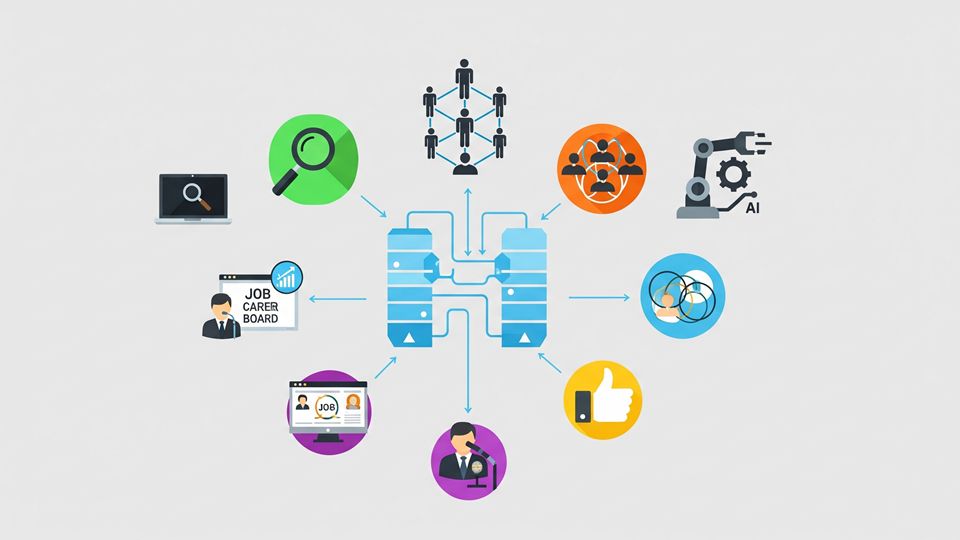
Advances in recruiting technology have also accelerated adoption. Modern applicant tracking systems and talent acquisition platforms can automate segmentation, communication workflows, engagement tracking, event management, and candidate relationship nurturing at scale.
For organizations seeking sustainable hiring advantages, the question is no longer whether talent communities should exist, but how effectively they can be developed and managed. Platforms such as Zamdit enable organizations to move beyond static talent pools by creating structured, searchable, and continuously engaged candidate ecosystems that support long-term recruiting success.