Audit readiness starts with consistent recruitment records
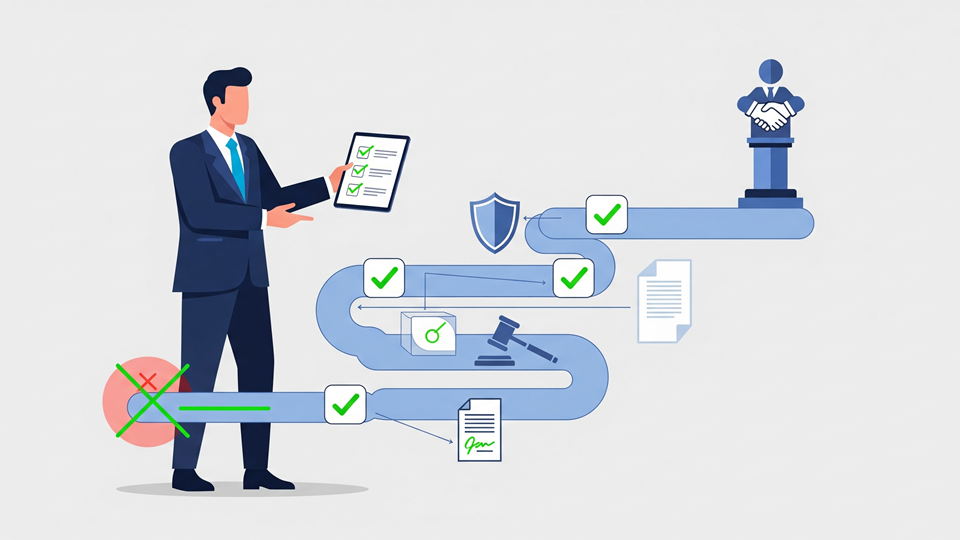
An audit-ready recruitment process is one where hiring decisions can be reconstructed clearly after the fact. That means the organization can show what role was approved, which criteria were used, who applied, how candidates were assessed, who made decisions, what communications were sent, and why a particular candidate progressed or was rejected. The objective is not to create paperwork for its own sake. It is to make recruitment decisions traceable, consistent, and defensible.
This becomes more important as hiring volume grows, more managers participate in interviews, and recruitment expands across departments or regions. Informal processes may appear efficient when a small team is hiring occasionally, but they create risk when records are scattered across inboxes, spreadsheets, chat messages, and personal notes. If a complaint, internal review, regulatory request, or legal dispute arises months later, reconstructing the decision may be difficult or impossible.
A strong process begins with a documented requisition. The role, business justification, reporting line, location, employment type, salary range or approved budget, required skills, and decision-makers should be defined before sourcing begins. Changes should also be recorded. If the salary range, location requirement, or essential criteria change during the search, the organization should be able to identify when and why.
Job descriptions and advertisements should be retained in the form actually used for recruitment. This helps demonstrate that candidates were evaluated against the role that was presented to the market. It also reduces the risk of requirements changing informally after applications arrive. Where multiple versions exist, version history can provide useful context during a later review.
Standardize evaluation and document hiring decisions
Audit readiness depends heavily on consistency. Organizations should define the selection criteria for each role before interviews begin and use a structured approach to evaluate them. Scorecards, competency frameworks, assessment criteria, and standardized interview questions can help hiring teams compare candidates using evidence that is relevant to the job.
Interview notes should record observable evidence rather than vague impressions. Comments such as "not a culture fit" or "didn't feel senior enough" provide little value in an audit and can introduce unnecessary risk. A stronger note might state that the candidate did not demonstrate experience managing budgets of the size required for the role, or that their technical assessment did not meet the predefined threshold. The distinction is important because the record shows how the decision relates to an established requirement.
Recruiting teams should also preserve independent evaluations before group discussions where possible. If interviewers complete scorecards immediately after an interview, the organization has a clearer record of each person's assessment before opinions are influenced by the wider panel. This supports more disciplined decision-making and makes it easier to understand how a final decision was reached.
Decision changes should be traceable as well. A candidate may initially be rejected and later reconsidered, or an interviewer may revise a score after reviewing additional evidence. These events are not necessarily problematic, but the system should retain enough history to explain what changed. Editing records in a way that permanently overwrites the previous state weakens the audit trail.
Consistency does not mean every candidate must follow an identical process in every circumstance. Reasonable adjustments, role-specific assessments, scheduling constraints, and legitimate process changes may require flexibility. What matters is that meaningful deviations are recorded and can be explained. For example, if one candidate completes an alternative assessment as a reasonable accommodation, the record should show that the variation was intentional rather than accidental.
Control candidate data, access, retention, and communications
Recruitment involves substantial amounts of personal data, including contact details, employment history, interview notes, assessments, salary expectations, identification documents, and sometimes sensitive information. An audit-ready process therefore needs clear rules for what information is collected, where it is stored, who can access it, how long it is retained, and how it is deleted when no longer required.
Access should follow the principle of least privilege. A hiring manager may need to view candidates for their own vacancies, while HR administrators may require broader access. Interviewers may only need access to the information necessary for their stage. Keeping permissions aligned with responsibilities reduces unnecessary exposure and creates a clearer record of who could view or modify candidate information.
Retention policies should be operational rather than theoretical. It is not enough to publish a privacy notice stating that candidate data will be retained for a particular period if records remain indefinitely in personal inboxes or exported spreadsheets. Organizations should define retention periods by candidate status or legal requirement and create processes to archive or delete records consistently.
Candidate communications are part of the recruitment record. Invitations, rejection messages, assessment instructions, offer-related correspondence, consent requests, and important status updates may all become relevant during an audit. Centralizing these communications makes it easier to establish what the candidate was told and when. This is particularly useful if a candidate claims they received different information about salary, location, working arrangements, or process expectations.
Organizations should also control exports and attachments. Downloading candidate data into local spreadsheets can create untracked copies outside normal retention and access controls. Where exports are necessary, teams should understand why they are created, where they are stored, and who is responsible for deleting them. The same applies to CVs, portfolios, assessment files, and identity documentation.
Make approvals, offers, and process changes traceable
Recruitment audits often extend beyond interviews. Approvals for headcount, compensation, offers, exceptions, and hiring decisions should be recorded in a way that identifies the responsible person and date. A verbal approval may be operationally convenient, but it provides little evidence later if questions arise about whether a salary exception or additional position was authorized.
Offer management deserves particular attention. The organization should retain the approved compensation package, offer version, approval history, date sent, candidate response, and any negotiated changes. If the candidate requests a higher salary or different start date, the final agreed terms should be distinguishable from earlier drafts. This protects both the employer and the candidate by reducing ambiguity.
Workflow changes should also be governed. If recruiters can add, remove, or reorder stages without oversight, comparable candidates may be processed differently without a clear reason. Organizations do not need rigid workflows, but important changes should be deliberate. For recurring hiring, standardized templates can provide a controlled starting point while still allowing justified variations.
Periodic internal reviews can reveal weaknesses before an external audit or dispute exposes them. A quarterly sample might examine whether requisitions were approved, scorecards were completed, rejection reasons were recorded, candidate communications were sent, and retention rules were followed. The purpose is not to penalize recruiters for every missing field, but to identify recurring gaps that indicate the process itself needs improvement.
Use technology to create an audit trail without slowing recruitment
The best audit-ready processes do not depend on recruiters manually creating a separate compliance file for every vacancy. Compliance should be embedded into the workflow. Required fields, structured scorecards, controlled permissions, approval steps, timestamps, activity histories, and centralized communications can generate the necessary evidence as normal recruiting work takes place.
An Applicant Tracking System can make this significantly easier by keeping candidate activity, evaluations, interviews, messages, assessments, offers, and workflow changes in one controlled environment. The value is not simply centralization. A strong ATS should help organizations understand who performed an action, when it happened, and what information existed at the time.
For example, if a rejected candidate challenges a decision six months later, the recruiting team should be able to retrieve the original job requirements, interview scorecards, assessment results, decision notes, communications, and timeline without reconstructing the process from several people's inboxes. That reduces operational effort while improving the quality of the organization's response.
Zamdit can support this approach by bringing recruitment pipelines, candidate records, assessments, scorecards, communications, scheduling, offers, and team activity into a structured recruitment environment. For organizations focused on compliance, the goal is not to make hiring bureaucratic. It is to make good recruitment practice visible, consistent, and traceable enough that the organization can explain its decisions with confidence whenever scrutiny arises.